


























Didier Engels | From Industrial Landscapes to Abstract Photography
Can a Shipping Container Become a Work of Art?
At first glance, the idea seems unlikely.
Shipping containers are built for transport, efficiency and durability. They move across oceans, spend years exposed to the elements and are stacked high in some of Europe’s busiest ports. They are designed to be functional, not beautiful.
Belgian photographer Didier Engels challenges that perception.
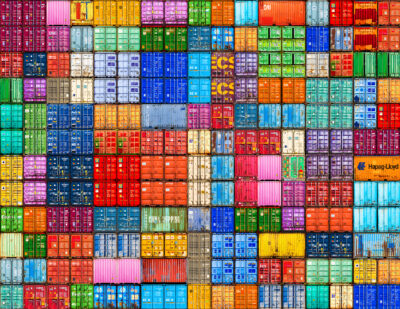
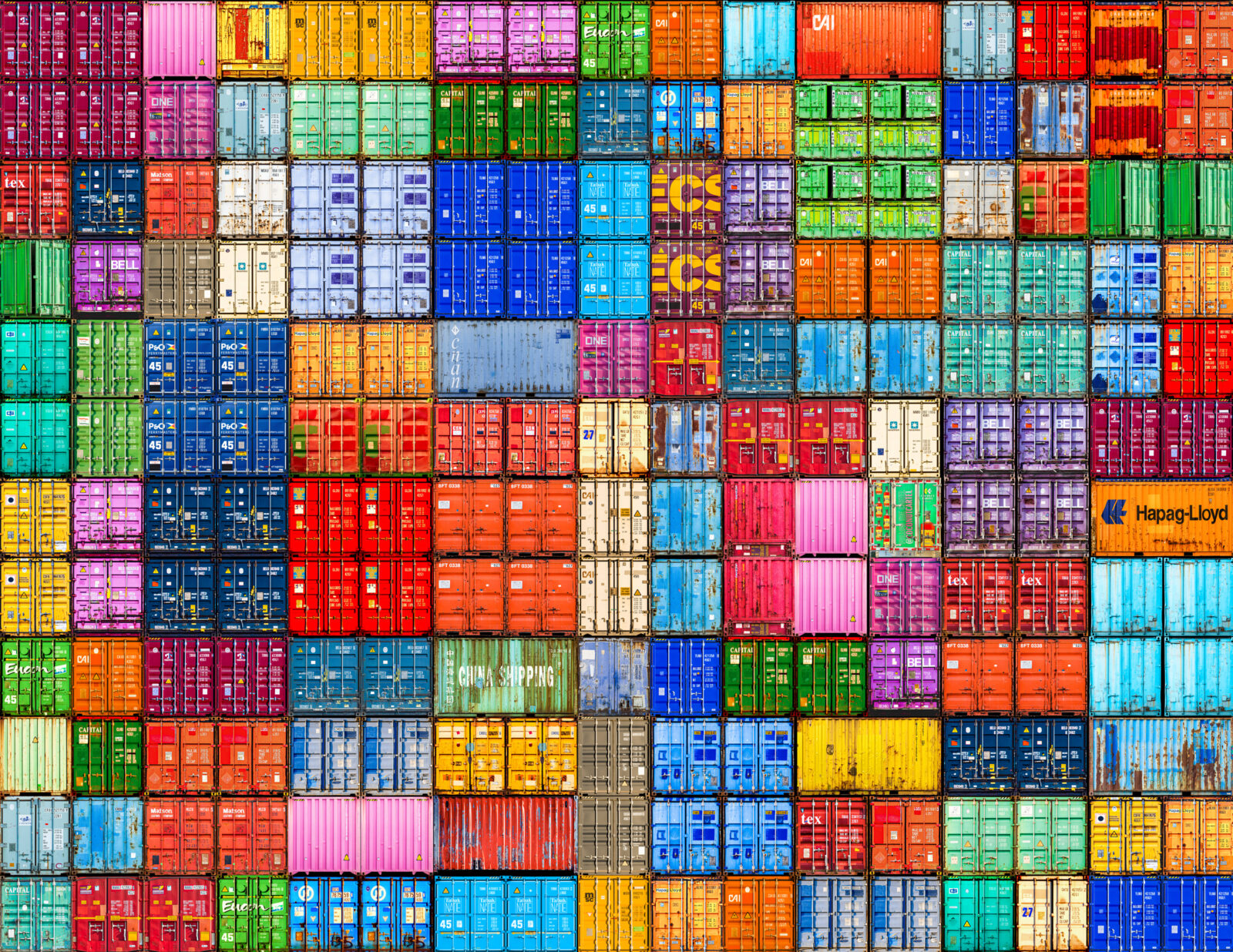
Where most people see industry, Engels discovers colour, rhythm and composition. Weathered steel becomes a painterly surface. Layers of faded paint reveal unexpected palettes. Rust, scratches and graffiti transform into expressive textures. What once served a practical purpose evolves into an abstract visual language that feels both contemporary and timeless.
His work encourages us to reconsider the ordinary. It reminds us that beauty often exists in places we overlook—not because it is hidden, but because we rarely take the time to look closely enough.
Represented by Okker Art Gallery, Didier Engels has developed an artistic practice that occupies a unique position between contemporary photography and abstract art. This autumn, a curated selection of his work will also be presented during PAN Amsterdam, taking place from Sunday 1 November through Sunday 8 November.
Quick Facts
| Artist | Didier Engels |
| Nationality | Belgian |
| Medium | Fine Art Photography |
| Style | Contemporary Abstract Photography |
| Known for | Abstract compositions inspired by industrial landscapes |
| Representation | Okker Art Gallery |
| Upcoming presentation | PAN Amsterdam • 1–8 November |
Who Is Didier Engels?
Every artist develops a personal way of seeing the world.
For Didier Engels, that perspective was shaped in an environment few would associate with fine art: the Port of Antwerp.
As one of Europe’s largest maritime gateways, the harbour is a place defined by movement. Ships arrive and depart around the clock. Containers travel across continents. Steel structures withstand decades of wind, rain and salt water. Every surface carries the visible traces of time.
For most people, these surroundings simply blend into the background. For Didier Engels, they became an endless source of inspiration.
Every work by Didier Engels begins with reality. Weathered steel, shipping containers and industrial surfaces provide the visual foundation for his photography. Through careful observation, composition and a considered post-production process, these everyday fragments evolve into abstract photographic works that invite viewers to look beyond the obvious.
His photographs are therefore not about ports. They are about perception.
Each image asks the same question: What happens when we stop recognising an object and begin appreciating its visual qualities?
That question lies at the heart of Didier Engels’ artistic practice and explains why his work continues to resonate with collectors of both contemporary photography and abstract art.
Finding Beauty in Industrial Landscapes
Industrial environments are constantly changing.
Paint fades beneath years of sunlight. Salt leaves subtle marks across steel. Repairs introduce new colours. Graffiti appears, disappears and reappears. Rust slowly redraws the surface.
Time becomes an artist in its own right.
Instead of searching for dramatic scenes or iconic architecture, Didier Engels focuses on these quiet transformations. His photographs celebrate the marks left behind by weather, movement and human activity.
The original subject becomes almost irrelevant. What remains is colour. Texture. Rhythm. Balance.
Quote: “The eye will be drawn first by the colours, the alignments and the graphic nature of the image. It is only afterwards that the eye will perceive the underlying element, namely, the container or boat hull.”
This ability to isolate abstraction within reality is what gives his work such universal appeal. Whether viewers recognise a shipping container or not becomes secondary. The composition speaks for itself.
From Observation to Composition
Every artwork by Didier Engels begins in the industrial landscape.
Weathered shipping containers, steel hulls and industrial surfaces provide the visual foundation for his photography. During his visits to ports and docklands, he captures fragments that stand out through their colour, texture or geometry.
But the creative process doesn’t end there.
Back in the studio, photography, composition and post-production come together. Didier Engels carefully refines and develops his images, allowing individual elements to evolve into balanced abstract compositions. Rather than documenting a location, he interprets it, transforming everyday industrial details into autonomous works of contemporary photography.
The result is work that remains firmly rooted in reality while offering an entirely new way of seeing it. Colour, rhythm and texture take centre stage, inviting viewers to look beyond the original subject and experience the image as an abstract visual composition.
When Photography Begins to Resemble Painting
Many visitors encountering Didier Engels’ work for the first time assume they are looking at paintings.
It is an understandable reaction.
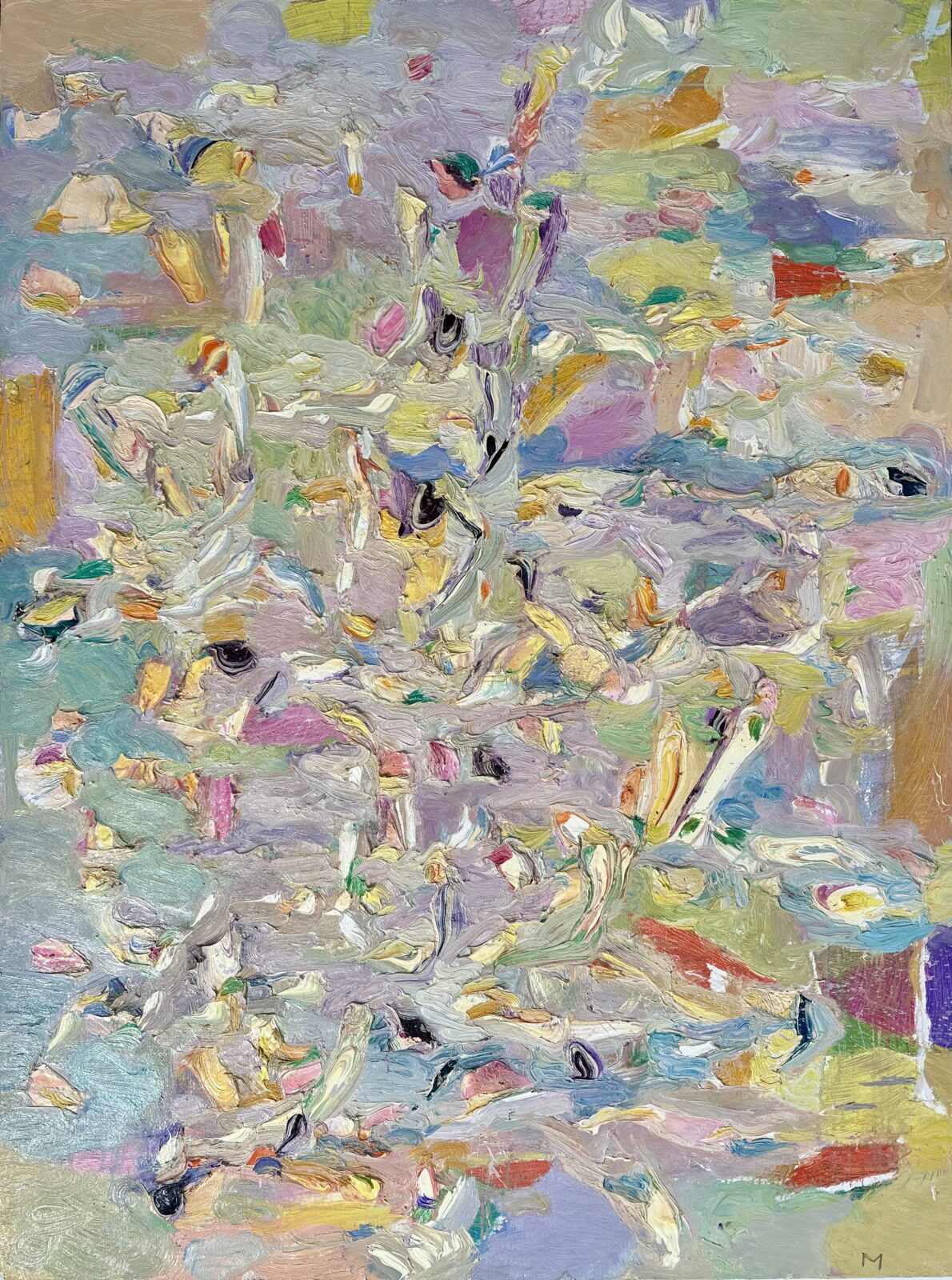
Large planes of colour, geometric divisions and expressive textures recall traditions found in abstract expressionism, colour field painting and minimalism. Only after spending more time with the work do subtle details begin to emerge.
A number. A welded seam. A fragment of lettering. The edge of a container. These small clues reconnect the composition with its industrial origin while never diminishing its abstract qualities. This constant dialogue between reality and abstraction gives the work remarkable depth. It rewards slow looking and encourages repeated viewing, revealing something new every time.
Featured Highlights at Okker Art Gallery
Every artwork by Didier Engels offers a different perspective on his artistic practice. Some works immediately captivate through bold colour and geometry, while others reveal their complexity more gradually through texture, layering and composition.
Together, they illustrate the breadth of his contemporary photographic oeuvre and his ability to transform industrial environments into compelling works of art.
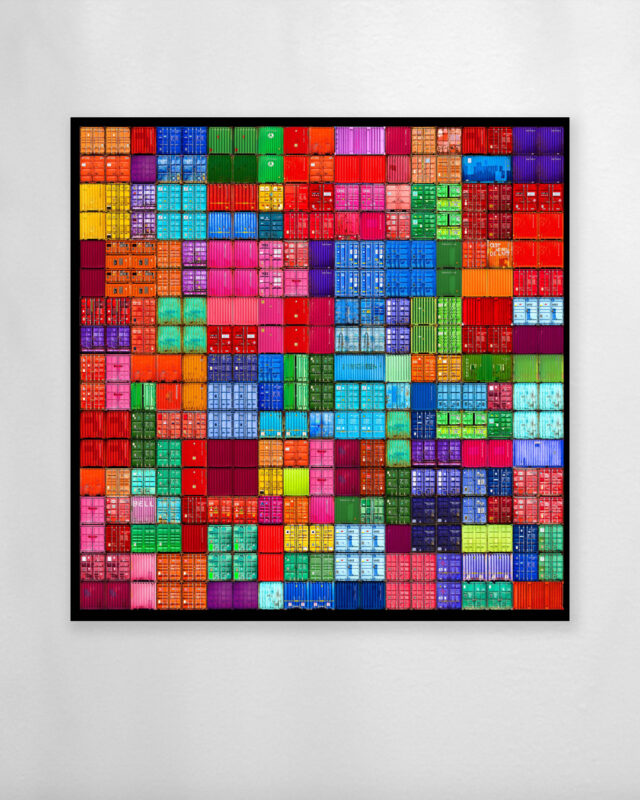
Tainer Addict Two
Some compositions seem almost too carefully balanced to exist in the real world.
Tainer Addict Two is one of those works.
Drawing inspiration from the industrial landscape, Didier Engels transforms an everyday subject into a striking abstract composition. Strong graphic divisions, layered colours and carefully balanced forms create an image that continually shifts between recognition and abstraction.
Rather than focusing on the function of the original object, the work invites viewers to experience colour, rhythm and composition as the true subject of the photograph.
The Urban Series
Some artistic ideas unfold across a series rather than within a single work.
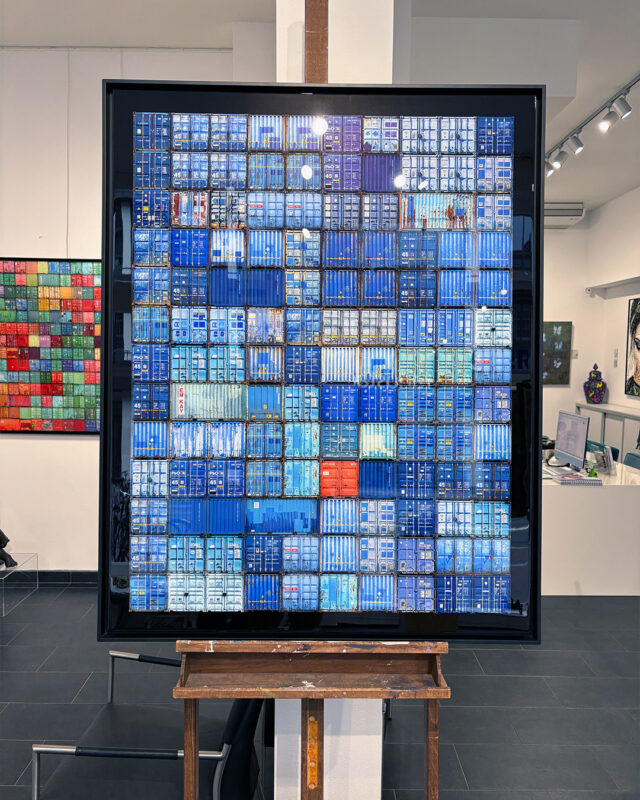
With the Urban Series, Didier Engels explores the vibrant visual language of Europe’s industrial ports through four interconnected photographic compositions: Urban Ember, Urban Cobalt, Urban Heat and Urban Viridian.
Inspired by shipping containers and docklands in Antwerp and Rotterdam, the series transforms familiar industrial elements into bold abstract photographic works. Colour becomes the connecting thread, while geometry, surface and material create four compositions, each with its own distinct atmosphere and character.
Viewed together, the Urban Series demonstrates the consistency of Didier Engels’ artistic vision. It is a celebration of the unexpected beauty found within industrial landscapes and an invitation to see these environments from an entirely new perspective.
Featured works
- Urban Ember
- Urban Cobalt
- Urban Heat
- Urban Viridian

Aqua Height
With Aqua Height, Didier Engels once again turns to the maritime world that has long inspired his work.
Drawing on his background in textile design and interior architecture, he explores the textures, colours and layered surfaces shaped by sea spray, weather and time. The result is a refined abstract photographic composition in which materiality and colour play a central role.
Printed on baryta paper and finished with epoxy, Aqua Height is available as a strictly limited edition of eight. It reflects Didier Engels’ ongoing fascination with the visual richness of industrial and maritime environments while demonstrating the balance between observation, artistic composition and craftsmanship that defines his work.
Why Collectors Appreciate Didier Engels
Collectors are often drawn to artists with a distinctive visual language.
Didier Engels has developed exactly that.
His work occupies a unique position within contemporary photography. While firmly rooted in reality, each photograph possesses the visual strength of an abstract painting. This duality allows the works to engage both photography collectors and those with an appreciation for contemporary abstraction.
Collectors particularly value four defining qualities.
Every work begins with reality
Real industrial environments provide the starting point for every composition. Through careful observation, composition and artistic refinement, Didier Engels transforms these fragments into distinctive abstract photographic work
His perspective is unmistakably personal
Thousands of people pass these industrial surfaces every day. Very few recognise the visual poetry hidden within them.
The works continue to evolve
Each viewing reveals new colours, details and relationships, making the experience of living with the artwork increasingly rewarding.
Contemporary yet timeless
Although inspired by modern industrial environments, the photographs transcend their subject matter. They become studies of colour, form and composition that remain relevant far beyond their original context.
Experience Didier Engels During PAN Amsterdam
Art deserves to be experienced in person.
From Sunday 1 November through Sunday 8 November, Okker Art Gallery will present a curated selection of Didier Engels’ work during PAN Amsterdam, one of the Netherlands’ leading art fairs.
For collectors, art enthusiasts and first-time visitors alike, PAN Amsterdam offers a unique opportunity to discover exceptional works presented by leading galleries from the Netherlands and abroad.
The photographs of Didier Engels are particularly compelling when viewed at their intended scale. Their rich textures, layered colours and subtle surface details reveal themselves gradually, creating an experience that simply cannot be replicated on a screen.
If you are planning to visit PAN Amsterdam, we warmly invite you to visit the Okker Art Gallery stand and discover the remarkable world of Didier Engels firsthand.
Before the fair, a curated selection of his work can already be viewed at Okker Art Gallery in Amsterdam, where our team is pleased to introduce collectors and visitors to his artistic practice and available works.
Discover the Work of Didier Engels
Some artists create images. Didier Engels changes the way we look.
His photographs remind us that extraordinary beauty often exists in the places we least expect. They transform the language of industry into contemporary art and encourage us to slow down, observe and discover something entirely new within the familiar.
Whether you visit Okker Art Gallery in Amsterdam or meet us during PAN Amsterdam (1–8 November), we invite you to experience the remarkable work of Didier Engels and discover why his photography continues to captivate collectors around the world.
Frequently Asked Questions
Who is Didier Engels?
Didier Engels is a Belgian contemporary photographer known for creating abstract fine art photography inspired by industrial landscapes, shipping containers and maritime environments.
Are Didier Engels’ photographs digitally manipulated?
No. His photographs capture naturally occurring colours, textures and compositions without digital manipulation.
Why do Didier Engels’ photographs look like paintings?
By isolating fragments from their original surroundings, the artist emphasises colour, geometry and texture. This creates compositions that closely resemble contemporary abstract painting while remaining entirely photographic.
Where does Didier Engels find his inspiration?
His work is primarily inspired by the industrial environments of the Port of Antwerp and other maritime locations, where weather, time and human activity continuously reshape surfaces.
Are Didier Engels’ works limited editions?
Yes. His photographs are available as carefully produced limited editions. Edition information is available on each artwork page or through Okker Art Gallery.
Where can I see the work of Didier Engels?
A curated selection is available at Okker Art Gallery in Amsterdam. Visitors can also experience his work during PAN Amsterdam, from 1 to 8 November, at the Okker Art Gallery stand.